It’s hard to watch your child struggle with school. The good news: in virtual school, you have more visibility — and more direct access to teachers — than most parents ever get.
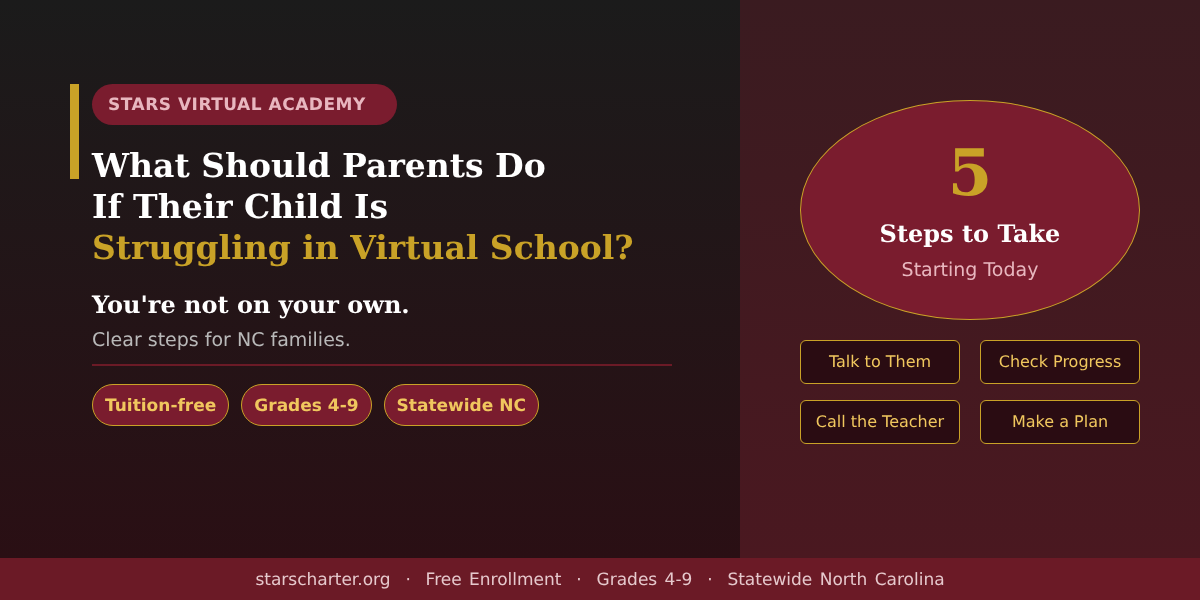
If your child is struggling in virtual school in NC, the most important step is to act early: talk with your child, review their progress data, and contact their teacher. At STARS Virtual Academy, a tuition-free North Carolina public charter school for grades 4–9, certified teachers and families work together to figure out what’s going wrong and put a plan in place.
Step 1: Talk with Your Child
Start with a calm, open conversation. Ask what feels hard right now. Is it a particular subject? Too much work at once? Trouble getting started? Feeling lonely or bored? Your child’s answer will often point to the real issue faster than anything else.
Step 2: Look at the Progress Data
SVA parents have 24/7 access to real-time progress, learning goals, and attendance dashboards. Look for patterns: Are assignments being missed? Are scores dropping in one subject? Is your child spending a long time on lessons without finishing? This gives you specifics to bring to the teacher.
| Don’t wait for a report card. In virtual school, you can see the warning signs as they happen — and teachers are a message away. |
Step 3: Contact Your Child’s Teacher
Reach out to your child’s teacher by message, email, or phone. SVA teachers hold live sessions and regular one-on-one check-ins with every student, and they’ll often have insight into what’s happening. Share what you’ve noticed and ask what they’re seeing.
Step 4: Identify the Cause Together
Common reasons students struggle in virtual school include:
- Academic gaps — a missed concept that later lessons depend on
- Routine and time management — not knowing when or how to start, or letting work pile up
- Motivation — losing interest or feeling disconnected
- Technology — device, login, or internet problems
- Learning differences — needs that may require accommodations or additional support
- Outside stress — health, family changes, or other life events
Step 5: Make a Plan and Follow Up
Once you know the cause, agree on a plan with the teacher. That might mean revisiting material at a slower pace, adjusting the daily routine, scheduling extra check-ins, getting tech support, or discussing an evaluation for additional services. Decide how you’ll check progress and when you’ll touch base again.
Helpful Resources
- Academic gaps: How virtual schools support students who fall behind in NC
- Motivation: How to keep a child motivated in online school in NC
- Learning differences: Can students with learning differences succeed in online school?
- IEPs and 504 plans: IEP and 504 plans in virtual school in NC
- Technology: What technology is needed for online school in NC
When Virtual School May Not Be the Right Fit
Online school works very well for many students, but not every student. If your child continues to struggle even with support, have an honest conversation with SVA about whether another setting might serve them better. SVA grades and transcripts transfer to traditional schools, so a change of setting doesn’t erase your child’s progress.
Frequently Asked Questions
My child is struggling in online school. What should I do first?
Talk with your child, review their progress dashboard, and contact their teacher. Acting early makes problems much easier to solve.
How do I contact my child’s SVA teacher?
Parents can reach SVA teachers directly by message, email, or phone.
Can SVA provide extra help?
Yes. Teachers provide individual support through one-on-one check-ins and can adjust pacing and assignments. Families with IEPs or 504 plans should discuss services with SVA.
What if virtual school isn’t working for my child?
Talk openly with SVA. Grades earned at SVA transfer to traditional schools if a change is the right choice.
How involved should parents be?
See our guide to parent involvement in online school in NC.
The Bottom Line
If your child is struggling in virtual school, act early and work as a team: talk with your child, check the progress data, contact the teacher, find the cause, and follow a plan. At STARS Virtual Academy, families have direct access to certified teachers and real-time progress — so struggles can be addressed before they become setbacks.
| Ready to learn more? Contact STARS Virtual Academy at starscharter.org to ask questions and apply. SVA is tuition-free for students in grades 4–9 across North Carolina. |
Interested in flexible, tuition-free online school in North Carolina? Learn more about STARS Virtual Academy — serving students in grades 4–9 statewide.