When parents compare elementary schools, class size is one of the first questions they ask — and for good reason.
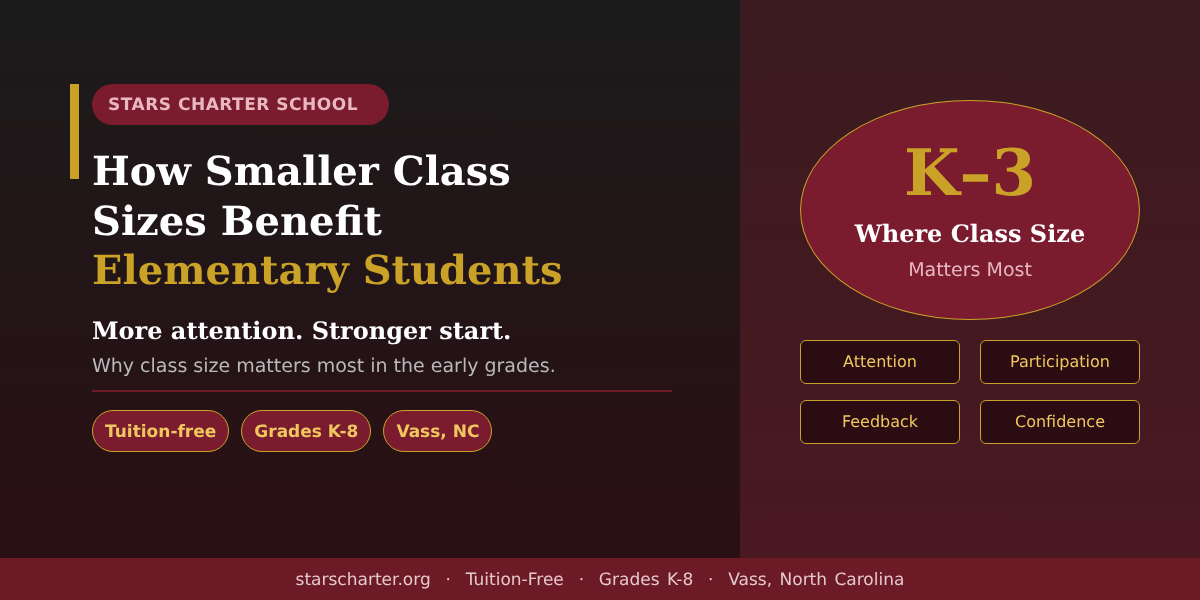
Smaller class sizes benefit elementary students by giving each child more teacher attention, more chances to participate, faster feedback, and a classroom where problems are noticed early. The effect is strongest in the earliest grades, when children are building the reading, math, and classroom habits that everything else depends on.
What the Research Says
One of the best-known studies of class size is Tennessee’s Project STAR (Student/Teacher Achievement Ratio), a large experiment in the late 1980s that randomly assigned kindergarten through third-grade students to smaller classes (about 13–17 students) or regular-size classes (about 22–25). Students in the smaller classes generally showed stronger early achievement, and researchers found the benefits were especially meaningful for students from disadvantaged backgrounds.
Class size isn’t the only thing that matters — teacher quality, curriculum, and school culture are critical too — but research like this is why many families look closely at class size when choosing a school for a young child.
| In the early grades, attention is everything. A teacher who can hear every child read, see every child’s work, and catch every misunderstanding early sets students up for years of success. |
Five Ways Smaller Classes Help Young Learners
1. More Individual Attention
With fewer students, teachers can spend more time with each child — listening to them read, checking their math thinking, and adjusting instruction to fit.
2. More Chances to Participate
In a smaller class, every child gets more turns to answer, ask questions, share ideas, and practice speaking in front of others.
3. Faster Feedback
Teachers can review work and give feedback more quickly, so mistakes are corrected before they become habits.
4. Earlier Identification of Learning Needs
Reading difficulties, attention challenges, or gaps in understanding are easier to notice when a teacher knows each student well. Early identification leads to earlier support.
5. A Stronger Classroom Community
Smaller groups help children feel known. Students who feel seen by their teacher and classmates tend to be more confident and engaged.
Questions to Ask When Comparing Schools
- What is the typical class size in my child’s grade?
- Are there teaching assistants or support staff in early-grade classrooms?
- How does the school identify and support students who need extra help?
- How often will I hear from my child’s teacher?
Our guide to how to choose the right school for your child in NC has more questions to consider.
STARS Charter School
STARS Charter School is a tuition-free K–8 public charter school in Vass, NC, with a focus on the performing arts and a strong sense of community. To learn about class sizes and classrooms for your child’s grade, contact our enrollment team or visit the academics page. For grades 4–9 anywhere in North Carolina, STARS Virtual Academy offers one-on-one check-ins and individual teacher attention online.
Frequently Asked Questions
Do smaller class sizes really make a difference?
Research such as Tennessee’s Project STAR found that students in smaller K–3 classes generally showed stronger early achievement, especially students from disadvantaged backgrounds.
Why does class size matter most in elementary school?
Young students are building foundational reading, math, and learning habits. More teacher attention during these years helps catch and address difficulties early.
Is class size the only thing that matters?
No. Teacher quality, curriculum, and school culture matter a great deal too. Class size is one important factor among several.
Is STARS Charter School tuition-free?
Yes. STARS is a tuition-free public charter school.
How do I enroll at STARS?
See our guide to how enrollment works at STARS Charter School.
The Bottom Line
Smaller classes give elementary students more attention, more participation, faster feedback, and earlier support — benefits that matter most in the first years of school. When you compare schools, ask about class size alongside teaching, curriculum, and culture.
| Want to see STARS in person? Contact STARS Charter School at starscharter.org or call 910-695-1004 to ask about enrollment at our tuition-free K–8 campus in Vass, NC. |